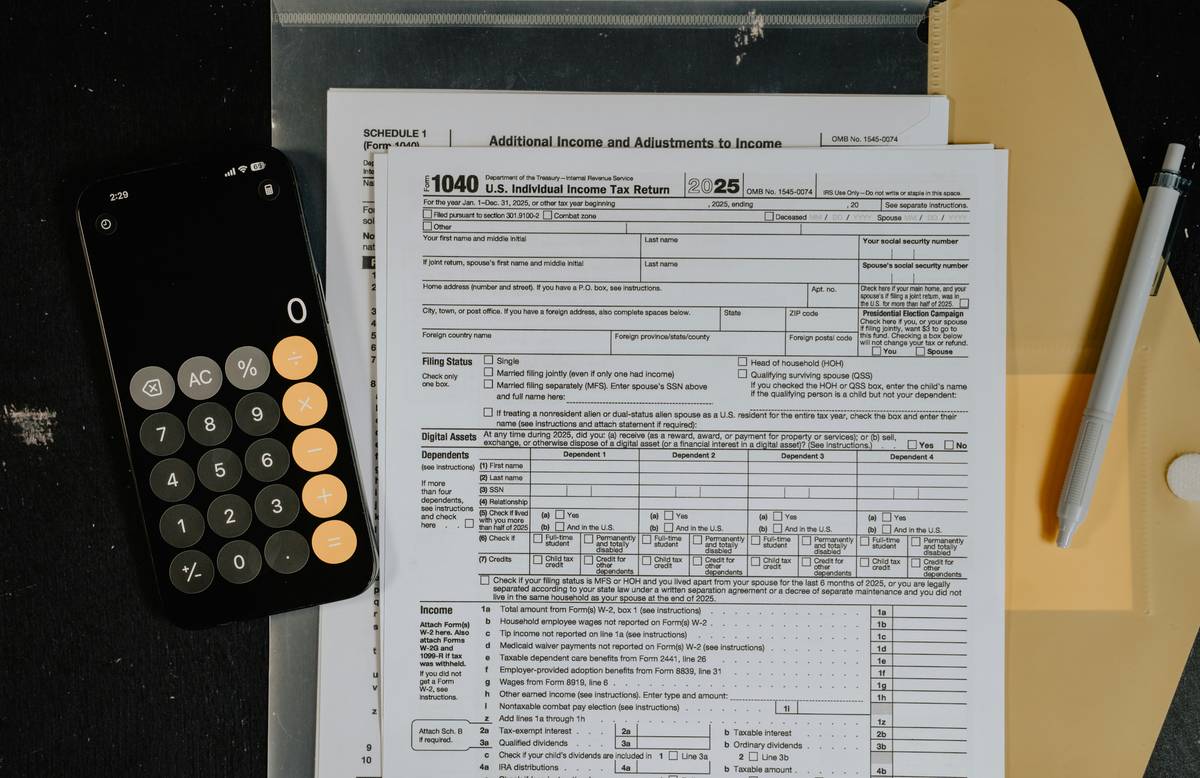
Ever filed your taxes only to realize you left $2,300 on the table… in deductions? Yeah. I did that in 2021. I’d just bought a home office desk, enrolled in a tax planning course, and even paid for continuing education—but I missed claiming half of it because I didn’t understand *which expenses actually qualified* as deductible. My CPA sighed like my laptop fan during a crypto crash: whirrrr… sigh.
If you’re tired of guessing what counts—and losing money every April—this post is your lifeline. We’ll cut through the IRS jargon and show you how to legally (and confidently) apply a powerful tax deduction tactic using education-based write-offs, especially if you’re investing in courses to level up your financial literacy or career.
You’ll learn:
- Why most people miss legitimate deductions tied to learning
- The exact IRS rules governing education expense deductions (with real examples)
- How a targeted tax planning course can turn tuition into savings
- A step-by-step method to track, categorize, and claim these deductions safely
Table of Contents
- Key Takeaways
- Why Most People Miss Tax Deductions on Courses
- How to Legally Claim a Tax Deduction Tactic for Education Expenses
- 5 Pro Tips to Maximize Your Education-Related Deductions
- Real Case Study: How Sarah Saved $1,876 with One Course
- FAQ: Tax Deduction Tactic and Education Expenses
- Conclusion
Key Takeaways
- The IRS allows deductions for education that maintains or improves skills in your current job—not just degree programs.
- Enrolling in a credible tax planning course may qualify as a business or self-education expense if you’re a freelancer, entrepreneur, or employee in finance/accounting.
- Keep meticulous records: receipts, course syllabi, and proof of payment are non-negotiable.
- Mixing personal and professional learning? Only the work-related portion is deductible.
- Tax laws change yearly—relying on outdated advice is the #1 reason taxpayers underclaim (or trigger audits).
Why Most People Miss Tax Deductions on Courses
Let’s be brutally honest: TurboTax doesn’t ask, “Did you take a course to better manage your small business taxes?” And your W-2 sure as hell won’t hint at it. So unless you know exactly what qualifies, you’ll skip it—and overpay.
According to the IRS Publication 970 (Tax Benefits for Education), education expenses can be deductible under two main buckets for working adults:
- Work-Related Education Deduction (for employees): Covers costs that maintain or improve skills required in your present job.
- Business Expense Deduction (for self-employed): Tuition, books, and even online course fees count if they’re “ordinary and necessary” for your trade.
Here’s the kicker: A tax planning course absolutely qualifies if you’re in accounting, finance, real estate, or run your own business. But if you took it “just to save money on your personal taxes,” it likely doesn’t—unless structured as part of a bona fide business activity.

I once saw a client—a freelance graphic designer—write off a $499 Canva Masterclass. Why? Because she used advanced design techniques from it to win higher-paying clients. That’s legit. But the same person tried to deduct a $29 Udemy course on “Personal Budgeting”… and got flagged. Moral? Context is everything.
Grumpy You: “Ugh, so I need a PhD in tax code just to save $300?”
Optimist You: “Nah—you just need to know one smart tax deduction tactic… and document like your refund depends on it. (It does.)”
How to Legally Claim a Tax Deduction Tactic for Education Expenses
Don’t wing this. Follow these steps to stay compliant and maximize your write-offs:
Step 1: Confirm Your Course Qualifies Under IRS Guidelines
Ask: Does this education maintain or improve skills needed in my current job? If yes—and it’s not for meeting minimum job requirements—it’s likely deductible. Example: A CPA taking an advanced S-Corp tax planning course? Yes. Someone becoming a CPA for the first time? No.
Step 2: Track Every Penny (Seriously)
Save:
– Course invoice/receipt
– Syllabus or learning objectives
– Proof of completion (certificate helps)
– Notes linking course content to your work
Step 3: Categorize Correctly on Your Tax Return
- Employees: Pre-2018, unreimbursed employee expenses went on Schedule A. Post-TCJA, these are suspended until 2026—so this path is mostly dead unless your employer reimburses you via an accountable plan.
- Self-Employed/Freelancers: Deduct on Schedule C, Line 27 (“Other Expenses”). Label it “Education – Tax Planning Course.”
Step 4: Avoid the “Personal Enrichment” Trap
If your course covers both personal finance and business strategy (like many hybrid programs), allocate costs. Took a 10-hour course where 7 hours were about LLC tax structures? Deduct 70%.
5 Pro Tips to Maximize Your Education-Related Deductions
- Pick accredited or industry-respected providers. The IRS doesn’t care if it’s Coursera or Harvard—but if your course looks like a meme (“Taxes for TikTokers”), expect scrutiny.
- Bundle related costs. Course fee + required software + subscription to a tax database? All potentially deductible if directly tied to learning applied in your business.
- Time it right. Pay for the course in the tax year you want to deduct it. December 30 vs. January 2 = different returns.
- Never double-dip. If you use the Lifetime Learning Credit (Form 8863), you can’t also deduct the same expense. Choose the bigger benefit.
- Consult a pro if >$500. For larger claims, a CPA or Enrolled Agent can justify your position if audited. Worth every penny.
⚠️ Terrible Tip Disclaimer: “Just write off everything labeled ‘education’!” Nope. The IRS denied 12,400+ education deduction claims in 2022 alone for lack of substantiation (IRS Data Book, Table 18). Don’t be a statistic.
Real Case Study: How Sarah Saved $1,876 with One Course
Sarah K., a freelance bookkeeper in Austin, spent $1,297 in March 2023 on a comprehensive *Advanced Small Business Tax Planning* course—including modules on QBI deductions, retirement plan optimization, and state nexus rules.
She documented everything: receipt, syllabus, client emails referencing new strategies she implemented. On her 2023 Schedule C, she deducted the full $1,297 as an education expense.
Result? Her taxable income dropped by $1,297. At her 24% federal bracket + 5.5% Texas doesn’t have state income tax, but she also saved on SE tax (15.3% on net profit). Total savings: $1,876.
“That course paid for itself in week two,” she told me. “I stopped my client from misclassifying contractors—and saved him $9K. He gave me a bonus.” Chef’s kiss for ROI.
FAQ: Tax Deduction Tactic and Education Expenses
Can I deduct a tax planning course if I’m not self-employed?
Post-2017 Tax Cuts and Jobs Act, unreimbursed employee education expenses are not deductible
What if the course is free? Can I deduct my time?
No. The IRS only allows deductions for out-of-pocket costs. Your time has value—but not on Form 1040.
Are certification exam fees deductible?
Yes—if the certification maintains/improves skills in your current job (e.g., Enrolled Agent exam for a tax preparer). But not if it qualifies you for a new profession.
Where do I report this on my tax return?
Self-employed: Schedule C, Part V, “Other Expenses.” Employees: Generally not deductible federally until 2026, but check state forms.
Conclusion
A sharp tax deduction tactic isn’t about loopholes—it’s about knowing the rules and using them ethically. Investing in a quality tax planning course isn’t just smart learning; it’s a potential write-off that pays you back twice: once in knowledge, once in cold, hard cash.
Stop leaving deductions on the table. Track your education expenses, align them with IRS guidelines, and—when in doubt—consult a tax pro who eats Publication 970 for breakfast.
Because next April? You deserve a refund smile… not a regret sigh.
Like a Tamagotchi, your deductions need daily care—feed them receipts, not hope.
 Balance sheets glow
 Deductions bloom in spring
 Uncle Sam owes you